A Practical Guide for B2B SMEs Entering the Chinese Market! ??
With a population of 1.41 billion, China is the world’s second-largest economy in terms of nominal GDP and has been the world’s largest economy since 2016 in terms of purchasing power parity (PPP). Since the Reform and Opening-Up policy in 1987, China—a market with strong growth potential—has attracted numerous foreign companies seeking to launch their operations there. The Chinese market has been and remains a focal point in global economic discussions.
Furthermore, following the severe impact of the COVID-19 pandemic, China is once again open for business, and the government is eager to stimulate domestic and foreign economic activity to boost consumption. China offers excellent opportunities for foreign companies looking to expand into the Chinese market.
There are several reasons why B2B SMEs should sell in China.
Today, we'll guide you through the vibrant and dynamic landscape of the Chinese market.
1. Rapidly Growing Middle-Class Consumption
Recent decades have seen rapid economic development, leading to an increase in the middle class’s disposable income. Consumption patterns have shifted from mere survival to consumption based on personal tastes. According to the most recent simulation conducted by the McKinsey Global Institute, by 2025, more than 50 million households—representing the majority of urban households—could join the upper middle class. This emerging middle class is fueling the growth of domestic consumption and driving a typically consumption-driven economy.
Everyday life shows that most people enjoy a variety of consumer choices and fast, efficient delivery services. People seek a more comfortable lifestyle as soon as they can afford it—or even before they have reached middle-class income levels. For example, people follow fashion trends by buying clothes beyond their basic needs; they dine at the most popular restaurants and order meals through online platforms; and they view owning a home and a car as a sign of success. This massive demand is driving upstream businesses to grow at a breakneck pace.
As we all know, the B2C market has a significant impact on the B2B market. The current phase of post-pandemic recovery in China offers a golden opportunity for small and medium-sized enterprises to enter the market and reach this growing consumer base.
2. The World's Factory
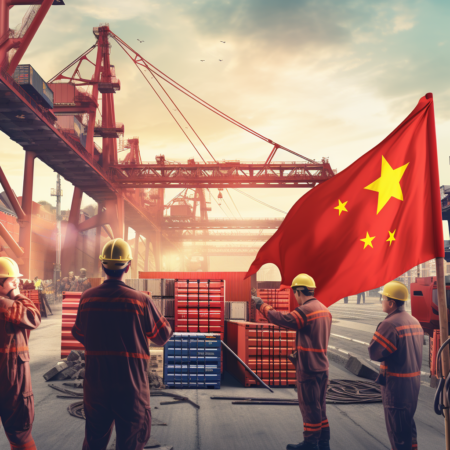
The Chinese economy is booming as a global industrial power, and its products are widely available. Most labels, brands, and stickers on a variety of products indicate that they are “Made in China.” China is therefore known as “The World’s Factory.”
One of the well-known reasons is the abundant supply of low-cost labor in the country. China’s vast labor pool makes it possible to manufacture in large quantities, meet any seasonal demand in the sector, and even adapt to unexpected spikes in demand. Factories operate like an unstoppable machine, producing goods for the entire world. China exports a large majority of manufactured goods, among which electrical and electronic machinery and equipment, as well as apparel, textiles, and footwear, are by far the most significant. Agricultural products, chemicals, and fuels are also major exports.
Despite the pandemic and the trade war, China’s robust production capacity and comprehensive supply chain have demonstrated their resilience in the face of global shocks. There is talk of Vietnam emerging to replace China as the “world’s factory,” which is both true and false. Vietnam is cost-competitive compared to China; however, China’s decades of manufacturing experience, along with its advanced shipping logistics and production capacity, remain unshakeable. China will continue to firmly hold its place in manufacturing as technology rapidly advances in the coming years.
3. Abundant talent and innovation
China has the world’s largest higher education system. As of late 2021, there were more than 3,000 colleges and universities in China, with more than 44.3 million students enrolled nationwide and 240 million Chinese residents who had completed high school. Every year, new graduates from a variety of industries enter the job market.
Innovation is the result of well-trained talent. In line with a dynamic startup ecosystem, the country emphasizes the development of innovative talent. B2B companies will find valuable partnerships and collaborations in China’s dynamic business environment.

4. Emerging Industries and Technologies
Driven by global economic conditions, China is currently experiencing a periodof significant growth in its science and technology sector. The Chinese government is actively investing in emerging industries and technologies, such as artificial intelligence, renewable energy, and electric vehicles.
According to the National Development and Reform Commission’s latest press conference in November, China will continue to support the development of enterprises by accelerating the transformation and modernization of traditional industries, fostering and developing strategic emerging industries, and stimulating new drivers for the innovative development of the digital economy.
B2B companies operating in emerging industries can find lucrative opportunities to collaborate with Chinese partners, exchange expertise, and participate in the country's innovation ecosystem.
5. China is a highly digitized country
China is rapidly embracing digitalization, leading to a thriving e-commerce ecosystem and increased connectivity.
In February 2023, the Chinese Communist Party unveiled the plan and timeline for building a “Digital China” by strengthening 5G and computing infrastructure. The timeline set out clear guidelines for the development of digitalization. By 2025, digital infrastructure will be effectively connected across a wide range of sectors, and China will become a global leader in digital innovation. By 2035, China’s level of digital development will place it at the forefront of the world.
Statistics show that in June 2023, Internet users in China spent an average of 29.1 hours per week online, or about four hours per day. This time spent online includes both regular consumers and B2B customers. B2B companies could distribute their marketing content through online platforms and effectively acquire potential customers. B2B companies in Europe can leverage digital platforms to facilitate cross-border trade, reach a wide audience, and accelerate communication in China.
There are many opportunities for B2B SMEs to find their niche market and build a profitable business in China. The Chinese market is uniquely distinct due to its distinctive national culture and regional cultural diversity across the country. Furthermore, global social media platforms such as Google, Facebook, and LinkedIn are banned in China. It is therefore crucial for B2B companies to conduct thorough market research, understand the regulatory landscape, and develop culturally sensitive strategies to successfully operate in China.
In the next article, we will highlight unique Chinese social media tools and cultural insights for B2B SMEs looking to enter the Chinese market and achieve long-term success.