Drive Engagement with a LinkedIn Post That Converts
LinkedIn has become the essential professional social network for B2B small and medium-sized businesses looking to build their brand, generate leads, and establish themselves as thought leaders in their industry. With over 900 million users, it’s no surprise that companies are using it to reach their target audience.
With so much competition on the platform, creating content that stands out and converts doesn’t happen by chance. Every social media platform has its own rules, and LinkedIn is no exception.
In this article, we’ll share 9 practical tips for creating an effective LinkedIn post, based on the experience our consultants have gained on the job.
1. A good hook
As you scroll through your LinkedIn news feed, you’ve most likely noticed that not all posts are displayed in full. The content of these posts is truncated. Only the first few lines of your content appear.
In practical terms, it’s the first 210 characters that will help you convince your target audience to click on the “See More” button and thus generate engagement. So, we strongly encourage you to put extra effort into crafting those first two lines.
They should be clear, concise, and, of course, include your keywords. These keywords reflect the vocabulary your buyer persona uses and the information they search for online.
2. Create value
The body of your post will expand on your opening remarks with relevant content.
If you’ve captured your audience’s attention with your hook, at this stage you’ll elaborate on your point using your argument. You’ll share your ideas and advice or help your audience address their pain points by drawing on the expertise you’ve gained in your niche, in line with your editorial calendar. Your message must be clear and understandable to your target audience. Maintaining consistency across your various types of posts is also essential.
There are guidelines on the ideal number of characters for a successful LinkedIn post. However, focus primarily on the value your content will provide to your target audience by creating high-quality content. For your information, the average length of a post is 57 words.
You should also consider incorporating the conversion funnel into your communication strategy. Your prospects are at different stages of the buying process. Make sure you know how to address each one.
Statistics are often very well received. Including them in your posts is a plus.
3. A striking image
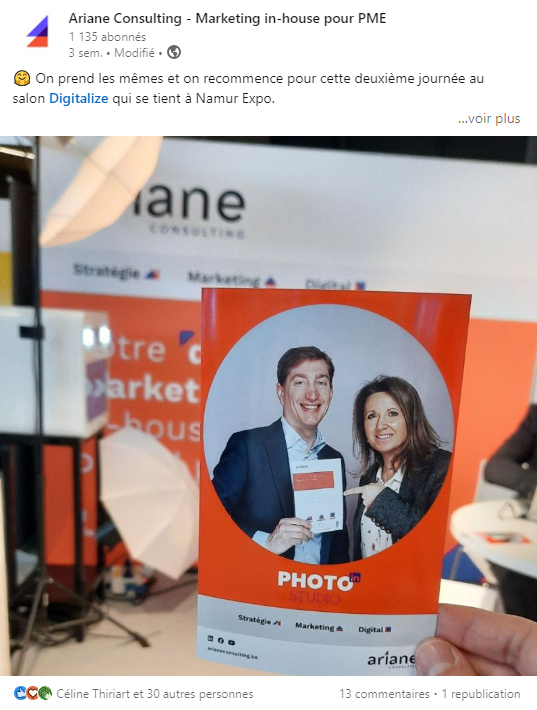
As we mentioned, your content appears in a news feed. Since your content is truncated, it’s important to capture your audience’s attention with a high-quality image. The goal is to engage your audience by making your post more appealing.
You can choose an infographic or a video to illustrate your points. If you decide to use a photo, the recommended size is 1200 x 627 pixels.
In any case, we recommend varying these visual elements to keep your community engaged. Content that’s too repetitive can become tedious, which doesn’t help drive conversions.
4. The Right Tone
LinkedIn is widely recognized as the premier social network for B2B. However, it’s very important to keep in mind that, at the end of the day, it’s real people who are interacting on the platform.
The tone you choose to adopt will reflect the way you communicate with your customers and prospects. It is therefore very important that it be perfectly aligned with your company’s style and the messaging used by your sales team.
This helps ensure consistency in the tone of communication when multiple employees are involved in drafting these publications.
5. The Call to Action
On social media, what people are looking for is connection. This certainly involves making new contacts and finding prospects, but it’s also—and above all—about deepening those connections. To nurture them, you’ll ask questions and seek to better understand what interests your audience.
Of course, the more engagement you generate, the more LinkedIn will like you. That’s the ultimate goal: for LinkedIn to find your post interesting enough to make it go viral.
However, it’s important to take things in the right order. Our primary goal isn’t to please the algorithm. What matters is pleasing our target audience and asking them the right questions so we can better understand them, respond to them, and satisfy them.
In moderation, you can, of course, invite them to sign up for a newsletter, sign up for a free trial, download a white paper, or schedule an appointment.
Remember that you have to give a lot before you can receive. The 80/20 rule applies here as well.
6. Hashtags and quotes
Hashtags and quotes are two elements to keep in mind when writing your post.
Hashtags are a great wayto increase the visibility of your post and reach a wider audience. By using relevant hashtags in your post, you help users find your content.
Mentions, on the other hand, let youreach out to people on the network. You may know them, but not particularly well.
Their purpose is to enrich the conversation by sharing a personal experience or specific expertise.
7. Emojis
In a professional setting, these small visuals are sometimes perceived as frivolous animations. That’s not the case at all. They serve a very real purpose.
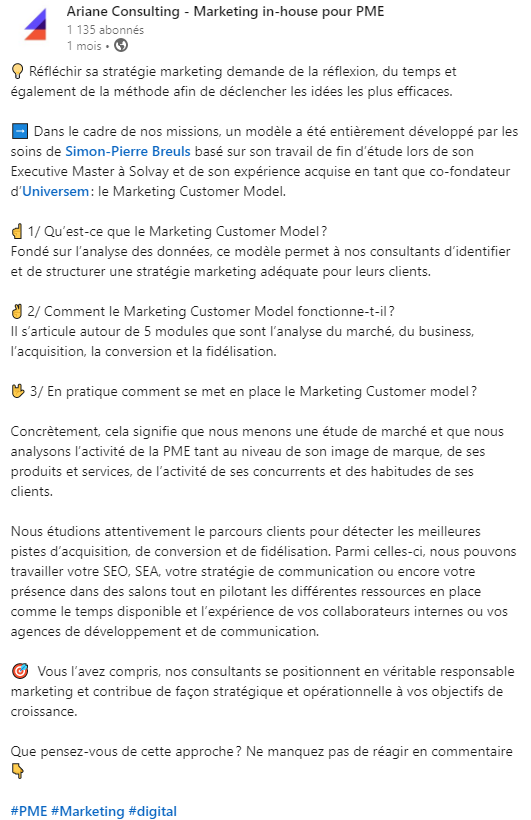
Well-structured posts are more engaging and easier to read than blocks of text. You can therefore use them to break up and organize your content. They’ll also help draw attention to the most relevant points.
Few posts use them, so you’ll stand out by using them. Also, keep in mind that research has shown that the number of emojis you use can affect the visibility of your posts. However, don’t overdo it.
8. Post at the right time
Studies have identified the best times to post on LinkedIn. Given the professional nature of the platform, it’s best to post during business hours and avoid Mondays and Fridays. The ideal time is in the morning, around 11 a.m.
However, we strongly recommend that you conduct your own tests and analyze the statistics provided by LinkedIn to identify the best times to post based on your audience.
9. Respond to comments
If you think your work is done once your post goes live, you're wrong. You still have a little work left to do: staying on the ball.
You'll likely receive reactions and comments on your posts. It would be a real shame to leave them unanswered, especially since building connections is the main goal. So be sure to stick around after you post.
By following these tips, you can maximize the impact of your LinkedIn posts and boost your online presence. Remember that the key to success on LinkedIn is providing value to your target audience and consistently engaging with your network.
If you’d like to learn more about this topic or receive personalized advice, our team of consultants is here to help. Please feel free to contact us to discuss it.