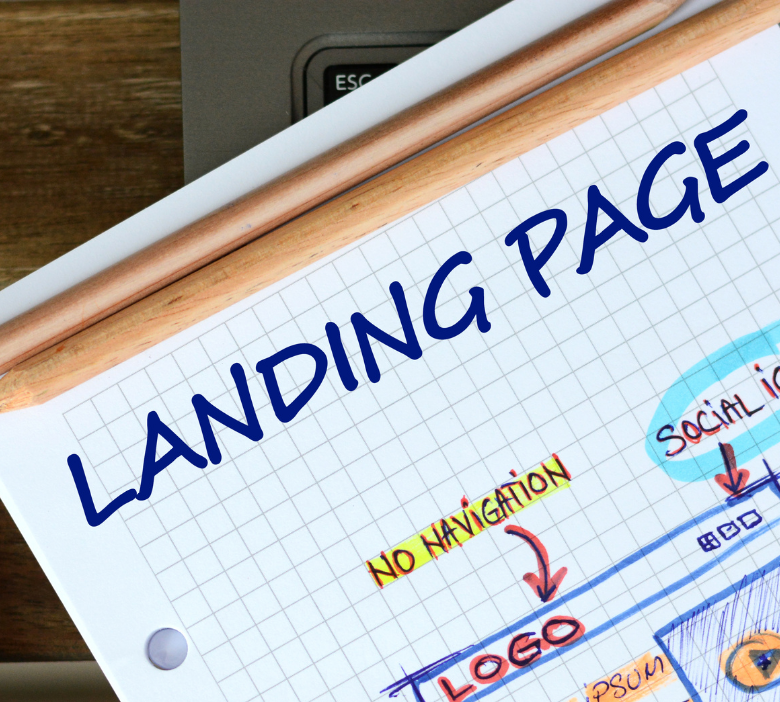
An effective landing page is an essential part of your digital marketing strategy. Even if you offer the best products or services on the market and your Google Ads campaigns are perfectly optimized, you’ll have a hard time convincing potential customers without a good landing page.
The visual design of your page has a huge impact on its effectiveness. Its purpose is to make it as easy as possible for your visitors to convert.
It is therefore essential that every element on your page contribute to your goal, whether that’s filling out a form, downloading a guide, or making a purchase.
Here are seven tips to help you create a high-performing landing page.
1. The A.I.D.A. Organization
A landing page should capture visitors’ attention, inform them, and reassure them in order to naturally guide them toward a specific action. We recommend setting up a conversion funnel that takes into account the four stages your customers go through:
Warning
Use an eye-catching image with a headline that directly introduces your offer. Don’t hesitate to be surprising or to use humor. The goal here is to grab attention, and you only have a few seconds!
Interest
Once you've caught your visitor's attention, it's time to introduce them to the key features of your offer.
Desire
Your prospect is interested, now you need to make your offer irresistible by explaining how you meet their needs and all the benefits they’ll enjoy. You can also include customer reviews or ratings to reassure them.
Action
To encourage customers to take action, creating a sense of urgency is often a good strategy. You can use incentives such as a special price, a limited-time offer, or limited stock.
2. Create a reading path
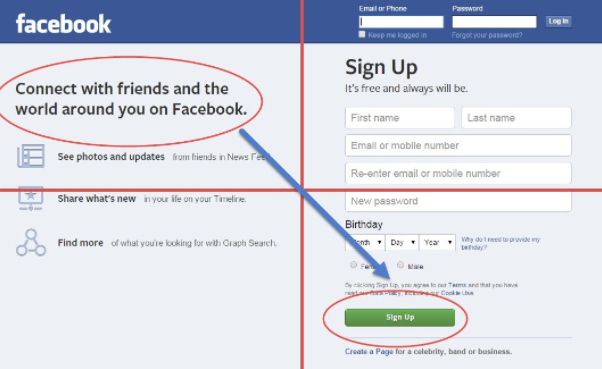
Your visitors’ eyes move across your landing page, looking for visual paths, reference points, and resting points. The gaze moves from left to right and tends to follow a diagonal path downward. It is therefore important to guide the reading path by strategically positioning information elements and calls to action.
For example, in the case of a page section designed to encourage sign-ups, divide it into four equal parts. Place your title in the top-left rectangle, the sign-up form in the top-right, and the call-to-action button in the bottom-right. Secondary information elements can go in the bottom-left, the weaker zone.
3. Colors and Contrasts
An effective design optimally combines layout, colors, and attractive images. It's important to display your page with different background colors to make its structure easier to understand.
The section designed to encourage action should be particularly prominent, featuring a call-to-action button that stands out clearly against the background.
4. Reinsurance Elements
To build trust with your future customers, a good landing page includes reassuring elements such as:
- Customer testimonials or reviews;
- Scores obtained from review sites;
- "Likes" from social media;
- Icons illustrating quality;
- Certifications
- Warranties
- Free Returns
All of these elements will help reinforce the professionalism and credibility of your proposal.
5. Call to Action
Since a large percentage of internet users leave a page without scrolling down, it’s essential to place your call to action at the top of the page so they have the opportunity to see your offer and potentially take advantage of it.
Other visitors will prefer to continue reading your page and will go through the conversion funnel mentioned earlier. It is therefore important to provide additional opportunities by, for example, including call-to-action links in the body of the text or placing additional banners with call-to-action buttons further down the page.
6. Don't ask for too much
If your call to action involves submitting information through a form, it's very tempting to collect as much data as possible.
But the more fields you ask a visitor to fill out, the less likely they are to complete the form and make the desired conversion. Ask only for the essentials; you’ll have other opportunities to gather more information.
7. Consistency with Your Advertising Campaigns
If you’ve run online ads or email campaigns, be sure to use the same keywords and taglines. Repeating the same wording reassures your visitors that they’ve come to the right place. And in the case of Google Ads, the algorithm will see this as a sign of consistency and therefore consider your ads to be more relevant.