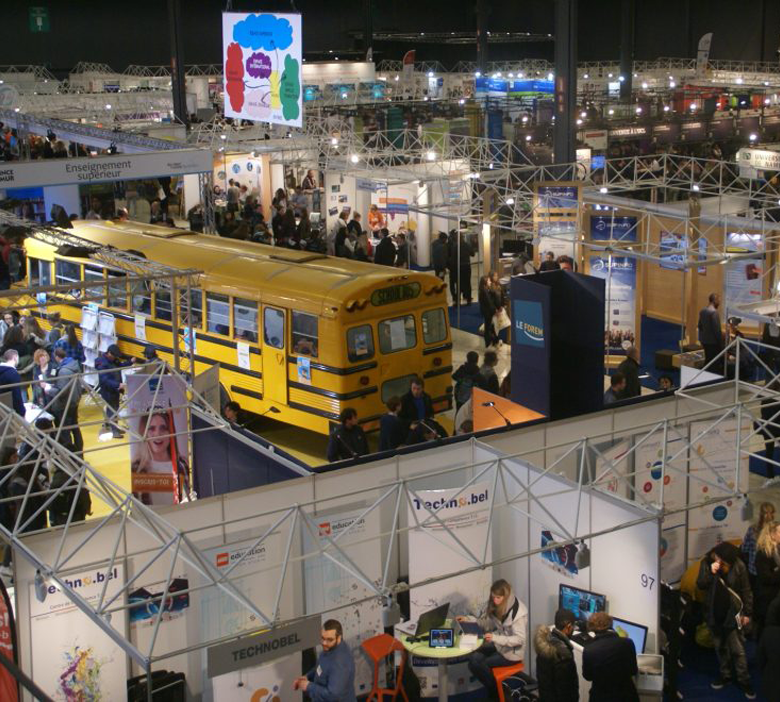
A Few Tips for Planning Your Participation in a Trade Show
Participating in a trade show is a bit like wanting to bring together your friends, your friends’ friends, and anyone else who wants to join the fun in a welcoming setting. You’ll want to do everything you can to welcome your guests in the best possible way. It’s therefore an event that requires preparation and can’t be improvised.
When you think about the work involved in organizing a private event, it’s easy to imagine the preparations required for a trade show. There are several steps to consider to ensure its success. We’ll help you make sure you don’t overlook any of them.
1. Identify the desired objective
There are many trade shows, both nationally and internationally. Therefore, it is important first and foremost to clearly understand why your small business should participate in a trade show and to choose one that is relevant to your industry.
The idea behind this is, of course, to make the trade show profitable. And to determine that, it’s important to compare the results you achieved with your business expectations.
2. Determine the available resources
Organizing an event like this will require not only a budget but also human resources. Carefully consider the resources you can allocate before you begin planning a trade show.
We recommend that you appoint a trade show coordinator—that is, someone who will oversee the entire event. This person will serve as the primary point of contact for all participants.
3. Select the trade show that best supports your goals
Trade shows are organized around specific themes. It is therefore essential to attend those where you have the best chance of achieving your goals.
In general, each industry has one or more trade shows specific to that sector. For example, companies in the biotechnology and life sciences sectors attend events such as Knowledge for Growth, BIO Europe, and bio.be/essenscia. You might also be interested in theSaveurs et métiers trade show, which is geared toward the food service industry and food retail. And to name one last one, there’s theDigitalize trade show, whichaims to help companies with their digital transformation.
Feel free to check the calendar of events for the professional associations representing your industry. You’re sure to find one or more trade shows that will connect you with your target audience.
4. Confirm your attendance with the organizers
Registration may open up to one year in advance. Once you’ve made your decision, be sure to contact the organizers as soon as possible.
You'll have the opportunity to negotiate the price of your booth if you sign up really early. Some trade shows actually offer more attractive rates for early registrants.
You’ll also have more options to choose from for your booth. Prioritize locations along the main aisles and those near other exhibitors that attract a lot of foot traffic.
5. Setting up the booth
First, you need to obtain the trade show’s technical guide. There you’ll find all the information regarding the booth’s floor space, electrical connections, the furniture provided, customization options, and more. This is the starting point for your planning.
Of course, the goal is to make this location an extension of your business. You’ll want to showcase your brand image and values there. So you’ll need to think about how to decorate it and possibly include roll-up banners, brochures, a TV, flooring in your brand colors, stickers, and more. The only limits are your creativity and your budget.
All of this takes time for delivery and printing, so be sure to start early.
Also, think about how much you want to invest in furniture. If you plan to attend trade shows regularly, it may be worth purchasing your own equipment and reusing it.
Functionality is also an important consideration. It’s important to ensure that people can move around the booth easily. If you’re planning to have speakers, product demonstrations, or negotiations with your sales representatives, it’s important to think about the layout of your space.
6. Attract visitors to the booth
Of course, you want to attract visitors to your booth. Be sure to enlist the help of your sales team. The trade show is the perfect place to set up meetings with your customers and prospects.
You should also let your entire database know that you’ll be attending this trade show. So be sure to send out invitation emails highlighting the exciting program to come. First, invite them to the event, and then send a reminder as the event approaches. Also, be sure to purchase enough tickets to provide them with free admission.
Promote your event on social media by creating eye-catching posts. Also mention it in your email signature. Your website remains an excellent showcase—create an attractive, well-placed graphic that your audience won’t be able to miss. Use all your communication tools!
You’ll need to provide refreshments for all the guests you’ll be hosting. To do this, the bare minimum you’ll need is a coffee machine. If you have a larger budget, you can, of course, go so far as to consider hiring a catering service. Keep in mind that environmental impact is becoming an increasingly important consideration. So say goodbye to plastic cups and opt for sustainable, eco-friendly alternatives instead.
You'll also want to collect all your contacts' information so you can reach them later. So be sure to bring everything you need (paper, pen, notebooks, binders) so you don't lose anything.
On the big day, social media will become your best ally. You’ll be able to create several posts to comment on the event, share everything that’s happening there, and connect with your audience.
7. Plan the day's schedule
Speaking of an enticing program, you’ve probably already given this some thought. Be sure to create a daily schedule that aligns with your audience’s interests and your current events. This is where the importance of having defined a buyer persona in your marketing strategy really comes into play.
If you've developed a new product, schedule several time slots for demonstrations. If you have engineers available to discuss your research, consider organizing presentations followed by Q&A sessions.
Also, be sure to set aside some downtime to allow your salespeople to talk with and build relationships with the most interested prospects.
8. After the trade show
Once everything is finished, social media is a good way to thank all your visitors. You might also consider sending a letter.
Feel free to respond to the questions you’ve been asked in a personalized way —for example, by suggesting meetings—to help you achieve your sales goals. It’s also an excellent way to set yourself apart from your competitors by demonstrating your responsiveness.
Finally, don't overlook any contacts you made during the trade show. Be sure to follow up with them so you don't miss any business opportunities.
As you can see, organizing a trade show can’t be done on the fly. With a well-thought-out schedule, a solid action plan, and preparations started early enough, you’ll turn these days into a unique opportunity to introduce yourself to your audience and drive sales.
Did you enjoy this article? Check out our video summary of these tips. And if you’d like to boost your event strategy to increase your return on investment, feel free to contact us by clicking the button below. We look forward to working with you.