
Working on your SEO (Search Engine Optimization) means optimizing your website to appeal to various search engines and to best answer a user’s query. SEO is part of your search engine marketing strategy. When a user enters a query into a search engine, a page of results with various links appears on the screen. This page is the SERP, or Search Engine Results Page.
The goal of your SEO optimization is to rank as high as possible in search engine results,ideally on the first page of the SERP and as high up on that page as possible. This isn’t something that happens by chance. There are a few best practices you should adopt. They revolve around three pillars:
- The On-Page Pillar: Everything Related to the Site's Content
- The Off-Page Pillar: The Trust Placed in Your Site
- The Technical Component: All elements related to the site's structure
We’ll go over these three pillars together. By the end of this article, you’ll have plenty of tips to help you optimize your website, which will contribute to improving your business’s ranking on Google. Let’s get started!
The On-Page Pillar: Website Content
Without content, it’s slmost impossible to rank well on Google. You simply must allocate resources to writing blog posts and web pages that are rich in relevant content.
In your content creation strategy, you can decide to update previously written articles, especially if they relate to important keywords. From there, seriously rework the page's content to bring new added value, since making only minor tweaks isn't really worthwhile.
Research Objective
When writing a page for your website, we recommend that you follow this guideline:
One page = one keyword = one topic = one answer to a search query
To truly understand your target audience’s search intent, it’s essential to develop a buyer persona—this will help you understand your audience and know exactly what interests them. Once you’ve identified the keywords, all you’ll need to do is use your website to address those interests.
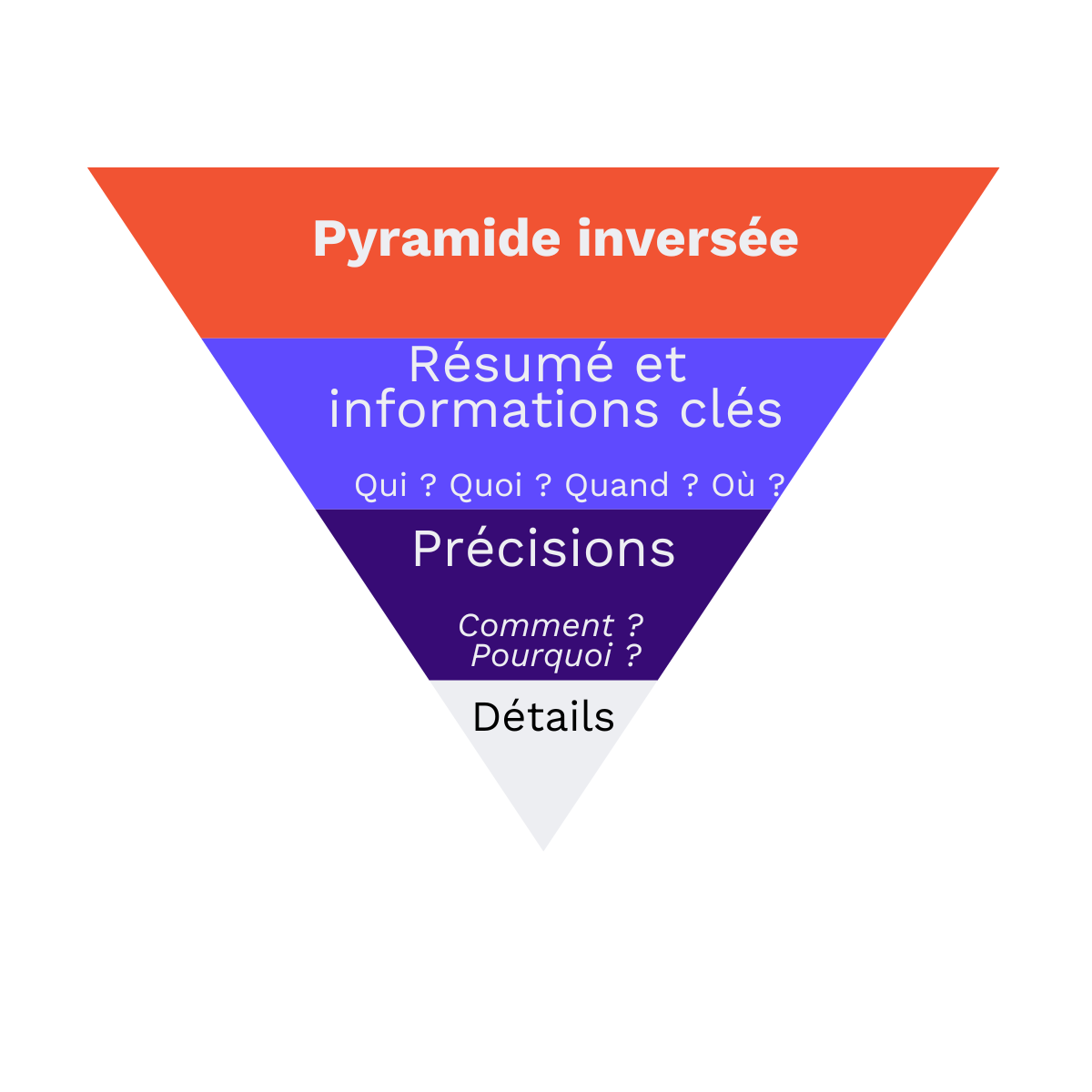
Numerous studies, such as the one conducted by the Nielsen Norman Group, show that few readers carefully scan the entire page. The main points of your message should therefore appear as soon as possible. Be sure to use the inverted pyramid principle to address your reader’s needs as quickly as possible.
Duplicate Content
Of course, as a responsible content creator, copying existing content is out of the question. This tactic won’t help you gain greater visibility, because Google can detect that you didn’t create the content yourself.
Text Readability
In your creative journey, we recommend you choosing text that’s easy to read, with relatively short paragraphs punctuated by rather brief sentences. This is the style that works best for the web.
Feel free to include a bulleted list in your body text. Google likes to provide direct answers when the search query calls for it.
The semantics used
What we like to recommend to our clients is to build a page around a keyword without over-optimizing it.
Structure your text around synonyms and complementary words that are intended to reinforce your meaning. To check whether you’re on the right track, set aside your keyword and ask yourself if you could easily identify it based on the vocabulary used in your text. If so, you’ve got it!
The Off-Page Pillar: The Trust Placed in Your Website
Your search engine ranking depends on the elements visible on your website, but that’s not the only factor. To include you in the SERP, search engines will assess your relevance. Are you truly the expert that the user is looking for?
To do this, it will make sure your site is referenced on other sites. The logic is pretty simple. If you’re regularly and spontaneously cited as an example, it means the information you provide is worth reading. So it can trust you.
From there, the quality of the website that mentions you matters a great deal. This is where the concept of website authority comes into play. The higher the authority of the site that links to you, the more positive it is for you, especially if it belongs to the same field of expertise as yours.
After writing your content, work on promoting it to be recognized as a trusted website. The more links pointing to your website you have, the better it will be for you.
How do you go about it? There are several options available to you:
- You can create content that will win over major sites, after first building it a following on your own social media, for example. This is the ideal approach, but not really an easy one;
- Once you have identified high-authority websites in your area of expertise, you can suggest that they include your article to supplement or replace an existing article, since yours is more up-to-date;
- You can reach out to partners (suppliers, customers, associations, local government officials, etc.). However, avoid doing a straightforward exchange by only linking back to the site that links to you. Search engines can spot this a bit too easily.
The Technical Foundation: The Site's Structure
This pillar is based on a fairly simple principle: how easily search engines can understand and crawl your web pages. It’s all about crawling and indexing. There are several elements that search engines will look for. Let’s go over them together.
Page Indexing
To appear in search engine results, your pages must be indexed. This step is essential for your SEO and, therefore, your organic search rankings. Search engine crawlers won’t automatically crawl all of your pages. You can help them by submitting your sitemap to Google Search Console.
The robots.txt file, on the other hand, allows you to manage how your various web pages are crawled using the instructions it contains. Google Search Console also lets you download this file.
Markup
Web crawlers will read many tags. These are part of your website's code.
Among the tags you must fill in, here are the essential ones:
- The Title Tag: The title displayed on the SERP
- The H1 tag: Your page's title
- The meta description tag: A brief summary of your content that appears on the SERP
- The Alt Tag for Images: A description of your image
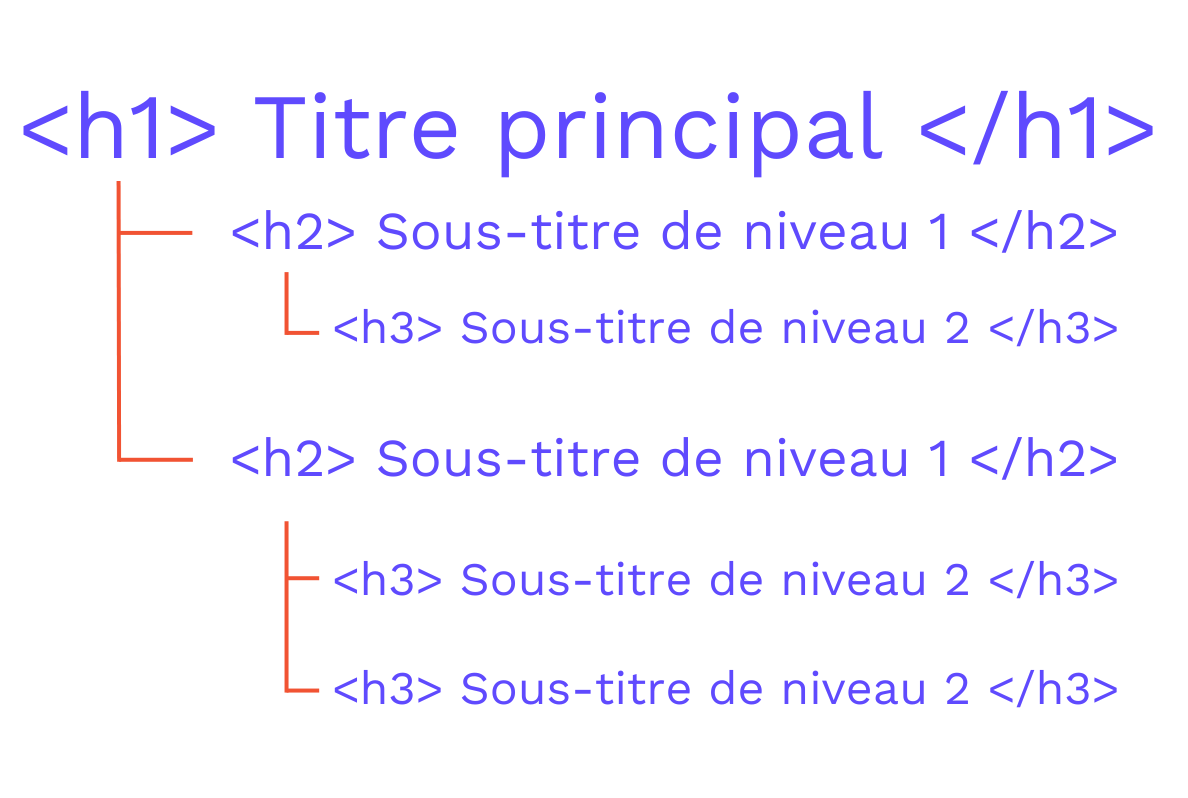
The structure of your page is very important. Just like a table of contents, your page is divided into different levels of headings, such as H2, H3, and so on. Don’t go beyond H6 or H7. If you do, revise the layout of your content to avoid this situation.
Although it is read, the meta description tag is no longer a factor in achieving a good SEO ranking. Its role is primarily important for the click-through rate. It is what will make the user want to click on your link rather than another one.
The mobile version
Browsing habits have changed. More and more of us are using our smartphones and tablets to search for information.
It is therefore essential that your website be designed with this type of device in mind from the very beginning.
Loading Speed
No one likes to wait. When a website takes a long time to load, what do you usually do? You leave the page and click on a link to another site. That sends the wrong signal. Next time, the search engine will be less likely to show your site in search results, favoring one of your competitors instead.
Pay attention to this aspect of your website, for example, by optimizing the file size of your images. There’s no need to upload an image with a quality high enough to be printed as a movie poster.
The page's URL
Providing aclear and readable URL structure reassures users about the quality of your website. Be sure to include keywords early in your URL. This will help search engine crawlers easily identify the content it describes. Avoid using capital letters and hyphens, however.
XML Sitemap
A sitemap is a file that lists the complete structure of your website, including its pages and URLs. By submitting it to Google Search Console, search engines can quickly crawl your website's content, which makes it easier to index.
404 Errors
Some links may no longer work because redirects could not be set up. The URLs you try to access then lead to error pages, which contribute to a poor user experience. Who likes to find themselves facing a closed door? No one.
We therefore recommend that you create a 404 page that instills confidence and redirects visitors to your homepage, which also gives them the option to navigate to the content they were originally looking for, such as your product pages. Design is also important. Reproducing a look and feel similar to your website builds trust with your visitors, making them less likely to look for information on another site.
There are quite a few areas to work on that can help improve your website’s search engine ranking. For more information, please feel free to contact us. We’d be happy to assist you.