
In our last article, we explained five reasons why B2B SMEs should enter the Chinese market.
Although there are many opportunities, it is important to be fully aware of the various challenges involved, namely the Great Firewall of China, the diverse social media ecosystems, a different search engine, a complex market, the language barrier, and cultural differences.
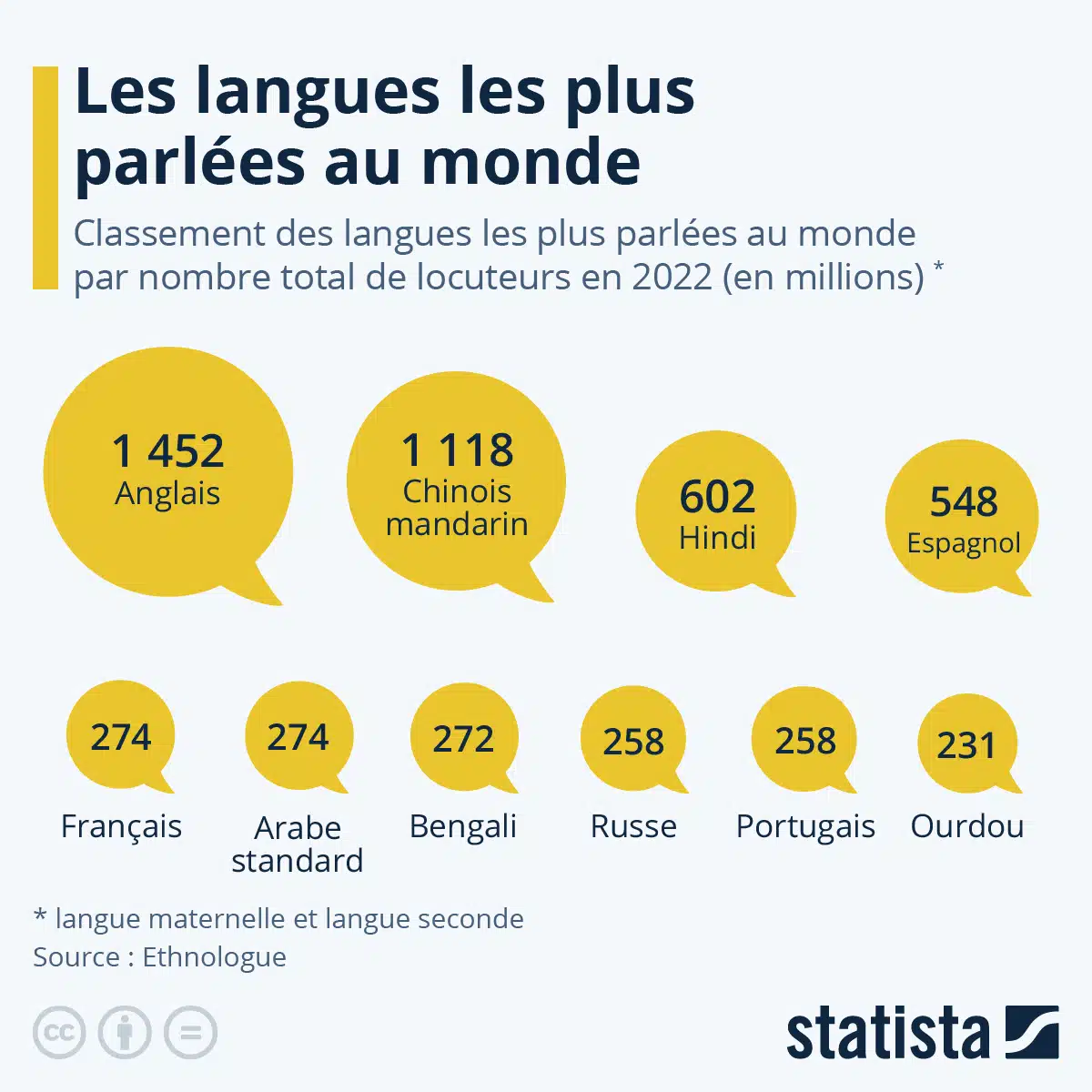
Did you know that approximately 1.1 billion people, nearly 13.5% of the world’s population, speak a form of Chinese as their native language? Because of the complexity of its writing system, its tonal nature, and cultural differences, Chinese is also considered one of the most difficult languages to learn.
Chinese students begin learning English at a very young age as early as kindergarten in some regions. However, English instruction focuses primarily on exam-related skills, such as grammar rules and vocabulary. Practical skills, both spoken and written, do not receive enough attention, leading to the phenomenon of “silent English.”
Mandarin is the official language of mainland China. Although English is widely studied, particularly in the business world, effective communication in China often requires the use of Mandarin. It can therefore be difficult for people who do not speak Chinese to communicate easily with local stakeholders, including suppliers, customers, and government officials.
In this blog post, we’ll discuss the challenges posed by language barriers in China and the importance of having a marketing strategy specifically tailored to China to avoid potential problems.
Inadequate Communication
Language is a powerful tool for communication when it is effective and clear. Language barriers can lead to breakdowns in communication.
Some companies may choose to pass up a specific market to avoid misunderstandings and misinterpretations during business negotiations. However, you certainly wouldn’t want to miss out on the Chinese market, a landscape brimming with opportunities.
On the other hand, customers in China may face the same dilemma as foreign companies, favoring partners who speak Mandarin.
In a multilingual environment, we tend to simplify or delay communication when language barriers exist, in order to avoid mistakes.
Our clients have encountered this problem. Organizers begin announcing the details of the exhibition one month before it takes place. This significantly reduces the preparation time for exhibitors, creating a greater sense of urgency.
China is a society based on relationships, or “guān xì” in Chinese, and an old saying goes: “Hard the first time, easy the second.” This means that when you first meet, you are strangers, but the next time, you become acquaintances.
Closer contact with Chinese clients or exhibition organizers can transform a business relationship into a personal one, thereby opening up opportunities for future cooperation.
For B2B companies, trade shows are a crucial part of local marketing. Breaking down the language barrier also means breaking down the wall between the two parties.
Incorrect translation
Translation requires a deep understanding of local idioms, tone, nuances, and context, much more than simply replacing words. Translation errors can sometimes lead to amusing results, right?
When Coca-Cola was first introduced in China in 1927, it was known by the unflattering Chinese name “kē dǒu kěn là,” meaning “tadpole bites wax.” Because of the product’s unique flavor and this strange name, sales were as low as one might imagine. In a desperate effort to change its Chinese name, Coca-Cola sifted through 40,000 Chinese characters to find the phonetic equivalent, “kě kǒu kě lè,” which means “delicious and joyful.”

"Coca-Cola" is recognized by the advertising industry as the best Chinese translation of the brand name, not only does it preserve the English syllables, but it also reflects the brand's core concept. Most importantly, it is simple, clear, catchy, and easy to say. This example shows how an inappropriate literal translation can have a significant impact on a brand's image.
Here are two other European brands that have been well translated: IKEA and Carrefour.
IKEA is actually an acronym for Ingvar Kamprad (the founder of IKEA), Elmtaryd (the farm where he grew up), and Agunnaryd (his hometown in Småland). No Chinese person would care about someone from a Swedish farm, and it would be ridiculous to translate the four letters directly. The Chinese name for IKEA, “yí jiā,” means “for home improvement.” It retains the pronunciation of IKEA while referencing an ancient Chinese poem in “The Book of Songs.” What a perfectly poetic name!
The French brand Carrefour translates to “carrefour” in English and is translated as “jiā lè fú” in Chinese, which means “a happy family.” This conveys the hope that every family will be happy.
In today’s digital marketing landscape, properly translated content is the first step in localization for China. We’ve encountered countless translation errors in communications. Content is often translated into Chinese word for word, which is understandable but can make a native Chinese speaker feel uncomfortable.
For example, B2B companies typically post upcoming events on their websites. We’ve noticed that “show” is translated as “jié mù,” which means “TV program/performance” in Chinese. In this context, “show” should be translated as “zhǎn lǎn” or “zhǎn huì,” meaning “exhibition” or “trade show.” A single word can make a big difference.
Inability to make decisions with confidence
Language barriers can affect the decision-making process, particularly in the context of remote, cross-border communication.
Because they feel more comfortable speaking their native language, Chinese clients with intermediate English proficiency will tend to prefer working with native Chinese speakers. As a result, people whose native language is not Chinese may find it challenging to build relationships with local partners, clients, and stakeholders.
The nature of human communication is to exchange information. Language barriers can limit access to essential information, market data, and industry trends. This can result in a lack of comprehensive understanding of the local business environment for non-Chinese speakers .
Language barriers can give the impression of less involvement and reduced engagement in communication. The person may not feel confident enough to actively participate in meetings and discussions in a business setting.
To overcome the language barrier, foreign companies often choose to work with translation firms or local Chinese agencies. However, this carries the risk of becoming overly dependent on third parties and lacking access to first-hand information. Due to a lack of confidence in the decision-making process, the decision-maker may hesitate for too long and miss an opportunity.

If you encounter these challenges in the Chinese market, you should consider investing in language training, using a professional translation service, or hiring a Chinese marketing consultant to refine your marketing strategy and reach customers more effectively. We’ll provide more tips for successful marketing in China in our upcoming blog posts.