In an increasingly competitive market, it is essential for all companies to develop an effective marketing strategy to attract and retain customers. However, SMEs often have limited budgets and fewer staff dedicated to marketing than large companies, which can make the task more challenging.
In this blog post, we’ll explore the marketing tools that can effectively support SMEs looking for resources.
There are many solutions available. Our entire team of Senior Consultants has therefore examined this topic in order to present you with a selection of accessible solutions that are perfectly tailored to the needs a Marketing Manager may encounter.
Whether you want to focus on researching your market, gaining a better understanding of your business, increasing your acquisition and conversion rates, or improving customer loyalty, you’ll find several avenues to explore here to implement a successful marketing strategy.
1. The Market: Market Finder, Think with Google, and Google Alerts
The two marketing tools we suggest you explore to better understand your market are tools offered by Google.
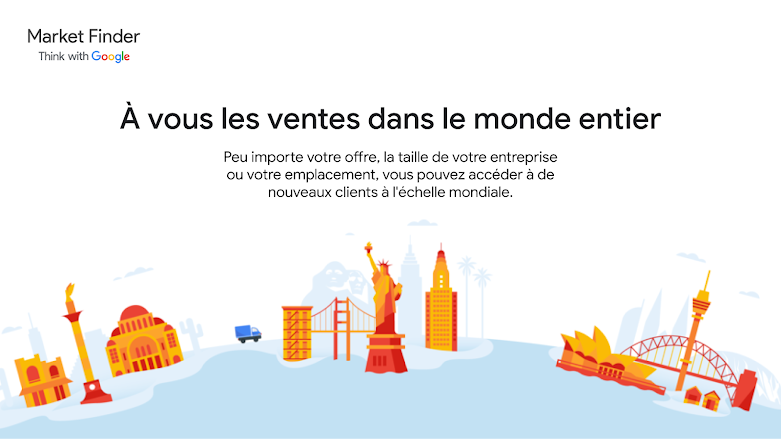
The first one, Market Finder Think with Google, is a free online tool. Among other things, it aims to help businesses identify potential international markets for expanding any type of business using data and analytics from Google.
It provides data on search trends, market size, competition, consumer behavior, and other key information. Its goal is to help you assess the potential of a given market based on information such as your URL and category identification. You also have access to a wide range of articles to help you gain further insight.
The second tool we recommend is Google Alerts. This is another free monitoring tool. By setting up certain alerts, you’ll receive email notifications. These alerts allow you to track all kinds of information on the topics of your choice, from news articles to blog posts and any other relevant content that includes the keywords you’ve specified.
You can use it to measure your reputation, but also to identify market trends and stay ahead of your competitors.
2. Business: Google Search Console and Canva
In the Business module of our Marketing Customer Model, we focus in particular on the company's branding as well asthe analysis of its products and services.
Of all the tools available on the market which we could spend quite a bit of time discussing, we want to highlight two essential tools in this blog post: Google Search Console and Canva.
The Google Search Console is a free Google product (again!). Its purpose isto help website administrators monitor and improve their site’s performance in Google search results through regular monitoring. We’ve written a detailed article about Google Search Console that we invite you to check out.
Canva is a partially free design tool. It offers users a wide range of free, inspiring templates. Say goodbye to the stress of a blank page and you can create your marketing materials like a pro by drawing on these suggestions. You’re also free to design everything from scratch if you’d like. With its paid plan, you can import all the elements specific to your brand guidelines for even greater convenience.
3. Lead Generation: Google Trends and LinkedIn Sales Navigator
There are many different solutions worth exploring to expand your network. We will continue to limit ourselves to two tools (at least in this article) to remain efficient.
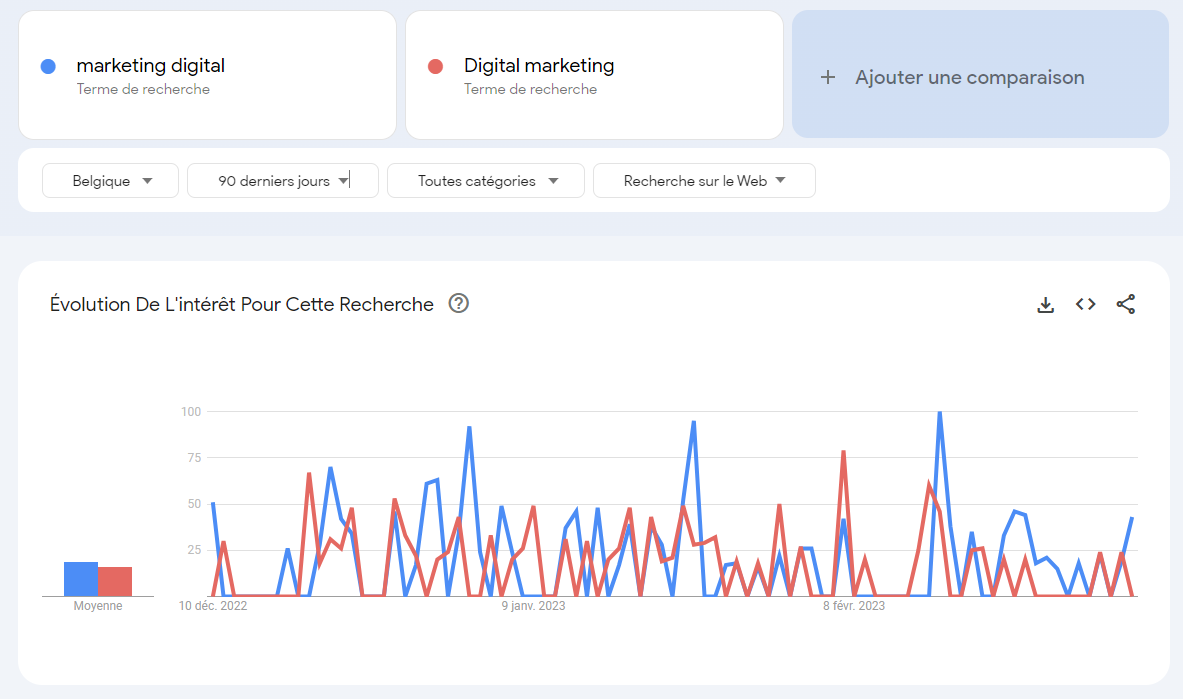
Since SEO is a key component of any marketing strategy, at least in the short and medium term, we'd like to talk to you about Google Trends. That’s right, another free tool from Google.
It will allow you to track search trends for specific keywords and phrases, helping you choose the most relevant option for your content. You'll gain a better understanding of your users' search habits and can adjust your SEO strategy accordingly.
Another useful tool to explore is LinkedIn Sales Navigator. This sales prospecting tool allows companies to find prospects on LinkedIn and build relationships with them. This is a paid tool. Thanks to its powerful filtering system, you can identify relevant profiles based on your target market and access high-quality information to help grow your business.
4. Conversion: Unbounce and Mailchimp
Unbounce is a paid tool typically used to create online advertising campaigns. It is a platform for creating landing pages. These pages appear when users click on advertising links. Their purpose is to convert visitors by providing them with well-crafted, relevant information and encouraging them to take a specific action, such as filling out a contact form.
Mailchimp is an email marketing platform designed to help you implement an email marketing strategy. The goal of this tool is to build meaningful relationships with your existing and potential customers using personalized and targeted emails.
Starting with an optimally segmented customer database, you can create mailing lists and send them tailored messages. Reporting tools are available to track the effectiveness of your campaigns. You can also set up automated workflows.
5. Data Retention: Google Forms and Microsoft Forms
The best metric for measuring customer satisfaction is the NPS (Net Promoter Score) —that is, the likelihood that a user of your product or service will recommend you to others. It is based on a question such as, “On a scale of 0 to 10, how likely are you to recommend our company to a friend or colleague?” This is usually followed by a question designed to gather feedback on how to improve your services.
To do this, creating a survey is essential. It will allow you to calculate the NPS and learn more about your services. One marketing tool well-suited for this type of analysis is Google Forms.
This 100% free Google tool lets you create surveys and export the results for thorough analysis. Microsoft Forms is also a good tool for improving customer retention.
We have just reviewed several marketing tools tailored to B2B SMEs. By using these tools, you can improve your visibility and appeal to your target audience based on various strategic approaches, such as search engine optimization, online advertising, and email marketing.
However, let us remind you that every business is unique, and that the marketing strategies and tools you use should be tailored to your specific goals and needs.
We are, of course, always available to discuss your marketing strategy and the related marketing tools.